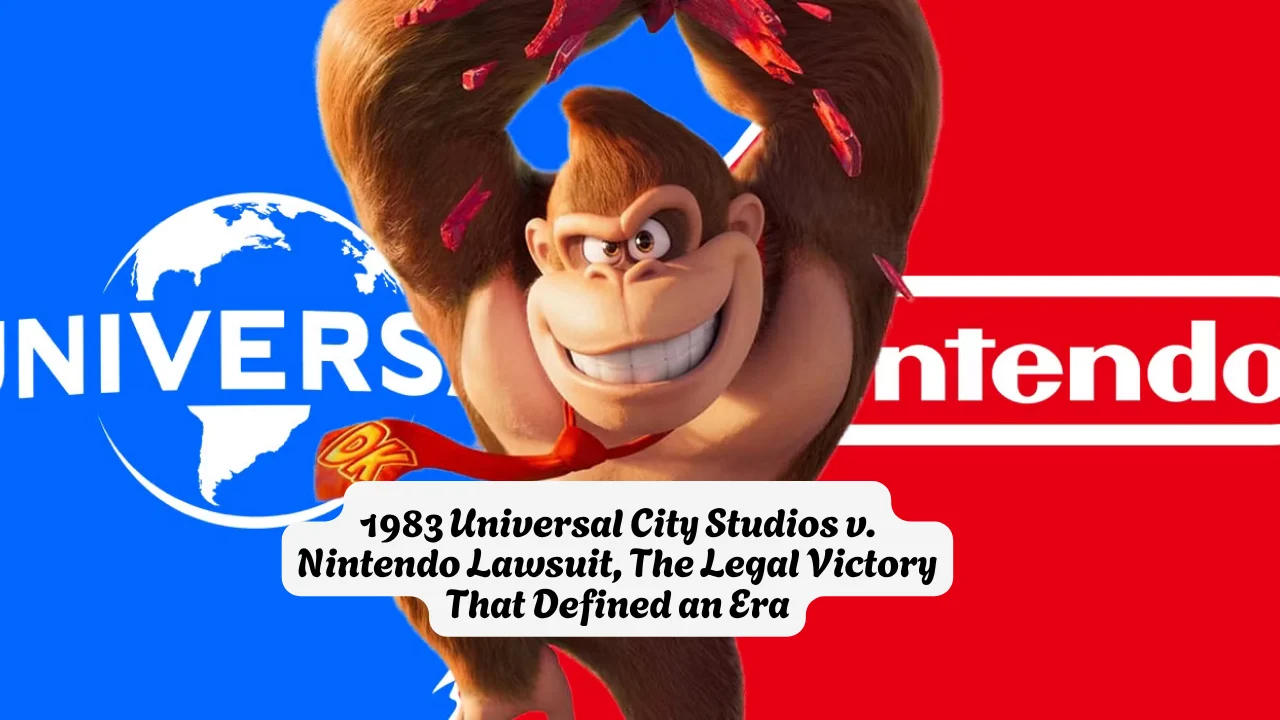
Donkey Kong's Triumph: The 1983 Lawsuit That Saved Nintendo's Future
In the annals of corporate legal battles, few stories resonate with the strategic brilliance and high stakes of the 1983 Universal Vs Nintendo Lawsuit. This landmark case pitted a rising Japanese video game company, Nintendo, against Universal City Studios, a titan of American entertainment. At stake was the future of a barrel-rolling gorilla, a captive woman, and ultimately, Nintendo's very existence in the burgeoning U.S. market. What unfolded was a masterclass in legal audacity, orchestrated by a lawyer named John Kirby, whose pivotal discovery not only secured Nintendo's victory but cemented its place as a global entertainment powerhouse.
The Dawn of an Arcade Empire: Donkey Kong's Meteoric Rise
The conflict began to brew in April 1982, nine months after Nintendo unleashed Donkey Kong upon American arcades. The game was an instant, unprecedented sensation. Players flocked to control "Jumpman" (who would later be renamed Mario) as he rescued Pauline from the clutches of a giant ape. Within a year, Donkey Kong had generated over $180 million from approximately 60,000 arcade units across the United States. Its success wasn't limited to coin-operated machines; lucrative licensing agreements with major players like Atari, Coleco, and Ruby-Spears added another $8.5 million to Nintendo's coffers. Donkey Kong wasn't just a game; it was a cultural phenomenon, a goldmine in the nascent video game industry.
This immense profitability, however, caught the attention of Universal City Studios. As the rights holder to the legendary monster King Kong, Universal saw Nintendo's success as an infringement on their intellectual property. Their legal team alleged that Nintendo's barrel-rolling gorilla was too similar to their iconic giant ape, and the game's "gorilla-plus-captured-woman" scenario directly mirrored the King Kong narrative, which they claimed as their exclusive domain.
Universal's Legal Onslaught: Targeting a Nascent Industry
Universal didn't just target Nintendo directly; they launched a systematic and aggressive campaign to pressure Nintendo's business partners. They dispatched stern cease-and-desist letters to licensees like Coleco and Milton Bradley, offering a stark choice: halt the sale of Donkey Kong-related products or pay Universal a percentage of every sale as royalties. Faced with the daunting prospect of protracted and expensive legal battles against an industry giant, many companies chose the path of least resistance. Atari, Coleco, and Ruby-Spears, among others, agreed to pay Universal royalties. From Universal's perspective, the strategy was highly effective, yielding significant sums without the need for court.
Nintendo, a relatively small Japanese company at the time, found itself cornered. Its nascent American operations, crucial for its long-term global ambitions, were under severe threat. However, unlike many of its partners, Nintendo, under the guidance of then-General Counsel Howard Lincoln and with the counsel of attorney John Kirby, decided to stand its ground. They believed in the originality of their creation and refused to capitulate.
The Public Domain Paradox: John Kirby's Audacious Discovery
The turning point in the 1983 Universal Vs Nintendo Lawsuit arrived through the meticulous diligence and brilliant strategic thinking of John Kirby. While Universal's legal team was busy collecting royalties, Kirby delved deep into legal archives, uncovering a crucial piece of Universal's past that would prove devastating to their current claims. This discovery, quietly devastating yet powerfully decisive, revealed a massive contradiction in Universal's legal history.
Kirby found that Universal had previously been involved in a separate lawsuit concerning King Kong. In a 1975-1981 legal battle against RKO General, Inc., Universal had vehemently and successfully argued that the King Kong story and its characters were, in fact, in the public domain. Universal had made this argument to establish its right to produce its own King Kong movie without paying the original creators. The federal court in California had concurred, ruling that the King Kong narrative belonged to no one. Remarkably, Universal had then proceeded to acquire a $200,000 trademark for a character they had just successfully argued was public property.
This discovery was a legal bombshell. How could Universal now claim trademark infringement over Donkey Kong when they had previously asserted that King Kong itself was in the public domain? John Kirby leveraged this stunning contradiction, turning Universal's own prior arguments against them. This strategic genius is further explored in John Kirby's Legal Audacity: How Nintendo Won the 1983 Universal Case, highlighting the brilliance of using an opponent's legal history to dismantle their current case. The intricacies of this legal reversal are detailed in Universal's Public Domain Twist: How Nintendo Defeated King Kong Claims, showcasing the power of historical precedent.
A Landmark Victory: The Aftermath and Lasting Legacy
In 1983, a federal court in lower Manhattan delivered its verdict in the 1983 Universal Vs Nintendo Lawsuit, ruling decisively in favor of Nintendo. The court not only dismissed Universal's claims but also awarded Nintendo $1.8 million in damages and fees. This included compensation for lost licensing fees due to Universal's interference and reimbursement for legal costs. The decision was a monumental triumph, far beyond the monetary award.
This victory was nothing short of a lifesaver for Nintendo's American operations. Had Nintendo lost, the financial burden of damages and ongoing royalties, coupled with a damaged reputation, would likely have crippled its ability to compete in the U.S. market. Instead, the win provided Nintendo with crucial capital, invaluable legal precedent, and, perhaps most importantly, newfound confidence and credibility. This enabled the company to move forward with its ambitious plans, paving the way for the launch of the Nintendo Entertainment System (NES) and the global phenomenon of Mario, a character whose origins are intrinsically tied to the Donkey Kong game at the heart of this lawsuit.
Lessons from the Lawsuit: Navigating Intellectual Property in the Digital Age
The 1983 Universal Vs Nintendo Lawsuit offers invaluable lessons for businesses and legal professionals alike, especially in industries driven by innovation and intellectual property (IP). Here are some key takeaways:
- The Criticality of Legal Due Diligence: Before launching a lawsuit, companies must thoroughly investigate not just their opponent's history, but also their own. Universal's oversight of their past arguments proved to be their undoing.
- The Power of Precedent and Public Domain: Understanding the nuances of intellectual property law, including what constitutes the public domain, can be a game-changer. What one company argues successfully today can be used against them tomorrow if their positions contradict.
- The Value of Tenacious Legal Counsel: John Kirby's dedication and strategic brilliance highlight the immense value of having sharp, determined legal representation. His ability to uncover and wield Universal's prior arguments demonstrates how a single lawyer can alter the course of corporate history.
- Don't Underestimate the Underdog: Universal, a major studio, underestimated Nintendo, a then-smaller video game company. This case is a testament to the fact that size and financial power don't always guarantee victory; legal merit and strategic defense can prevail.
- Protecting Your IP: For burgeoning industries like video games were in the 1980s, securing and defending intellectual property is paramount. Nintendo's victory allowed it to retain control over its highly successful creation, fostering further innovation and growth.
Practical tips for modern businesses include: always conducting comprehensive legal audits of your own intellectual property claims and history; investing in robust legal counsel from the outset; and never assuming that past legal victories make a company invincible against future challenges.
The 1983 Universal Vs Nintendo Lawsuit was far more than a simple legal dispute over a giant ape. It was a pivotal moment that safeguarded Nintendo's American future, allowing it to grow from a nascent video game company into a global entertainment behemoth. It stands as a powerful reminder of the strategic depth of intellectual property law and how, with a blend of courage, conviction, and cunning legal strategy, even the smallest challenger can achieve a triumphant victory against the largest of adversaries.